
Introduction: Why RTP Matters More at SC Casinos
Return to player percentages are always worth knowing, but at sweepstakes casinos they carry a weight that most players don’t appreciate until the math catches up with them. When you’re spinning with sweeps coins — the currency that can actually be redeemed for cash — every percentage point of RTP directly affects how much of your redeemable balance survives a session. At a real-money casino, a 94 percent RTP versus a 97 percent RTP is the difference between losing six cents and three cents per dollar wagered over time. At a sweepstakes casino, that same gap determines whether your free SC stretches into a cashable balance or evaporates before you hit the minimum redemption threshold.
The stakes of that distinction become clearer when you look at why people play. According to AGA research, 68 percent of sweepstakes casino players say their primary motivation is winning money. Not entertainment, not socializing — money. For a player base that overwhelmingly treats SC as something with real value, choosing the best RTP slots at sweepstakes casinos isn’t optimization for its own sake. It’s the most direct lever you have over your long-run outcomes.
What RTP Means in the Sweepstakes Context
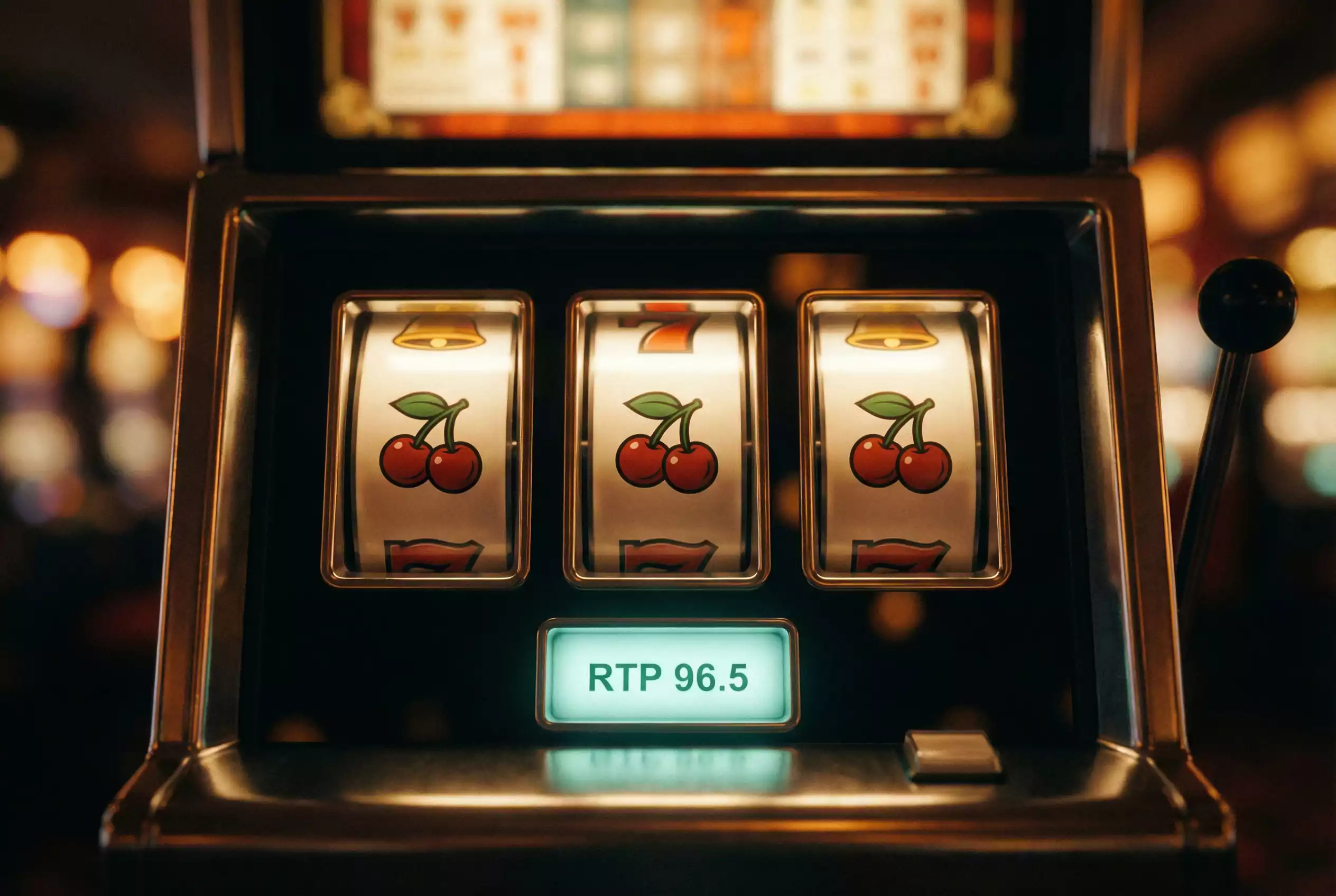
RTP — return to player — is the theoretical percentage of all wagered money that a slot returns to players over millions of spins. A slot with 96 percent RTP will, on average, return $96 for every $100 wagered. The remaining $4 is the house edge. This number doesn’t describe any individual session; it’s a statistical average across an enormous sample. You might win 500 percent of your stake in one sitting and lose everything the next. The RTP tells you what gravity looks like over time.
At sweepstakes casinos, the same mathematical principle applies, but the currency running through the formula is sweeps coins. When you wager 100 SC on a 96 percent RTP slot, you can expect to retain roughly 96 SC over enough spins. The 4 SC difference is the operator’s effective take on your play — separate from, and additional to, the margin they already earned when you acquired those SC through a gold coin purchase.
This layering is important. Industry-wide data from RG.org shows that sweepstakes operators return approximately 65 to 70 percent of gold coin purchases back to players as SC prizes. That figure reflects total inflows and outflows across the platform, including both the acquisition margin and the gameplay margin. A player who buys $100 in GC packages, receives bonus SC, and plays those SC on a 96 percent RTP slot will end up with considerably less than $96 — because the 65 to 70 percent payout rate already accounts for the combined effect of SC distribution ratios, gameplay losses, and redemption behavior.
The practical takeaway: RTP is only one layer of the economics, but it’s the layer you control. You can’t change how many SC the casino gives per dollar of GC purchased. You can choose which slots you play, and the RTP gap between the worst and best games on a typical sweepstakes platform can be 8 to 10 percentage points. Over hundreds of sessions, that choice compounds.
Highest-RTP Slots Available Across Major Platforms
Finding the highest RTP slots at sweepstakes casinos requires more detective work than at regulated online casinos, where RTP disclosures are often mandated by licensing authorities. Sweepstakes platforms aren’t bound by the same rules, so the data you get depends on the game provider’s transparency, not the casino’s regulatory obligations. That said, many of the slot titles found at sweepstakes casinos come from providers who publish RTP figures on their own websites, giving you a baseline reference.
Pragmatic Play is one of the most common providers on sweepstakes platforms, and several of its titles sit at the high end of the RTP spectrum. Gates of Olympus, a popular Megaways-style slot frequently featured at Pulsz and WOW Vegas, carries a default RTP of 96.5 percent. Sweet Bonanza, another Pragmatic Play staple, comes in at 96.48 percent. Both are high-volatility games, which means the returns are lumpy — long dry stretches punctuated by large wins — but the long-run math favors the player more than lower-RTP alternatives.
NetEnt titles, where available, tend to offer some of the best RTP figures in the sweepstakes space. Starburst, a classic low-volatility slot, runs at 96.09 percent RTP and is available on several platforms. Blood Suckers, a perennial favorite among RTP-focused players, comes in at 98 percent — one of the highest figures you’ll find on any sweepstakes casino. The catch is availability: not every platform licenses NetEnt games, and the ones that do may not carry the full catalog.
Proprietary in-house slots — games developed by the sweepstakes casino itself rather than a third-party provider — are the wild cards. Some in-house titles match or exceed third-party RTPs, but many don’t publish their return rates at all. Without a provider datasheet to reference, you’re playing blind on the math. If RTP is a priority, stick to games from named providers whose published rates you can independently verify. The five minutes it takes to check a provider’s game page before spinning saves you from sessions where you’re unknowingly grinding against a 90 percent RTP wall.
A few other high-RTP options worth noting: Relax Gaming’s Money Train series (around 96.2 percent), Push Gaming’s Jammin’ Jars (96.83 percent), and several Hacksaw Gaming titles that hover in the 96 to 97 percent range. The specific availability varies by platform and sometimes by state, so verify a game is in the lobby before selecting a casino based on its supposed game library.
RTP vs. Volatility: Choosing the Right Slot for SC Play
RTP tells you where the money goes over millions of spins. Volatility tells you how it gets there. A high-volatility slot with 96 percent RTP and a low-volatility slot with 96 percent RTP both return the same amount in the long run — but the experience of playing them is fundamentally different, and that difference matters for SC players more than most realize.
High-volatility slots deliver their returns in concentrated bursts. You might spin 200 times without a meaningful win, then hit a bonus round that returns 500x your bet. For players with a large SC balance and patience for dry spells, high-volatility games can produce the big redemption-worthy payouts that make sweepstakes play feel worthwhile. The risk is straightforward: if your SC balance runs out before the variance swings your way, those unrealized future returns don’t help you.
Low-volatility slots distribute returns more evenly. Wins are smaller but more frequent, which means your SC balance erodes slowly rather than collapsing in sudden drops. For free players working with a modest SC stack from daily logins and AMOE entries, low-volatility games are often the pragmatic choice. They extend your playtime, keep your balance above the redemption threshold longer, and reduce the chance that a single unlucky streak wipes out weeks of accumulated SC.
Medium-volatility slots split the difference and are the most common category across sweepstakes libraries. They’re the default if you don’t want to think too hard about variance management. The smart approach for SC play is to match volatility to your balance size: high volatility when you can afford to absorb losing streaks, low volatility when you’re protecting a balance you plan to redeem soon.
Do Sweepstakes Casinos Publish RTP Data?
The short answer is: most don’t, and they’re not required to. Unlike regulated online casinos in states like New Jersey or Michigan — where gaming commissions mandate RTP disclosure and conduct independent audits — sweepstakes casinos operate outside that regulatory framework. There is no federal or state-level requirement for a sweepstakes platform to tell you what any of its games return to players.
Some platforms voluntarily display RTP in each game’s info screen, usually accessible through a small “i” icon or help menu. When this information is present, it typically reflects the provider’s certified RTP rather than the casino’s own audit data. Whether the sweepstakes platform has adjusted the default RTP setting — many slot providers allow operators to choose from several configured RTP tiers — is usually not disclosed.
Industry self-regulation is slowly filling part of the gap. Camilla Wright, spokesperson for the Social and Promotional Games Association, has stated that the group’s Code of Conduct sets standards that go beyond traditional social casino best practices, and that the technologies and processes are already in place at most social sweepstakes operators. The SPGA’s framework encourages transparency and fair play, but compliance is voluntary, and the Code doesn’t specifically mandate per-game RTP publication.
For players, the practical response is to rely on provider-published RTPs as your reference point and to treat in-house games with unknown RTPs as higher-risk options. If a platform refuses to confirm whether it uses the default RTP setting for a licensed game, that silence is information worth factoring into your choice of where to play.