Introduction: Three Years That Reshaped Sweepstakes
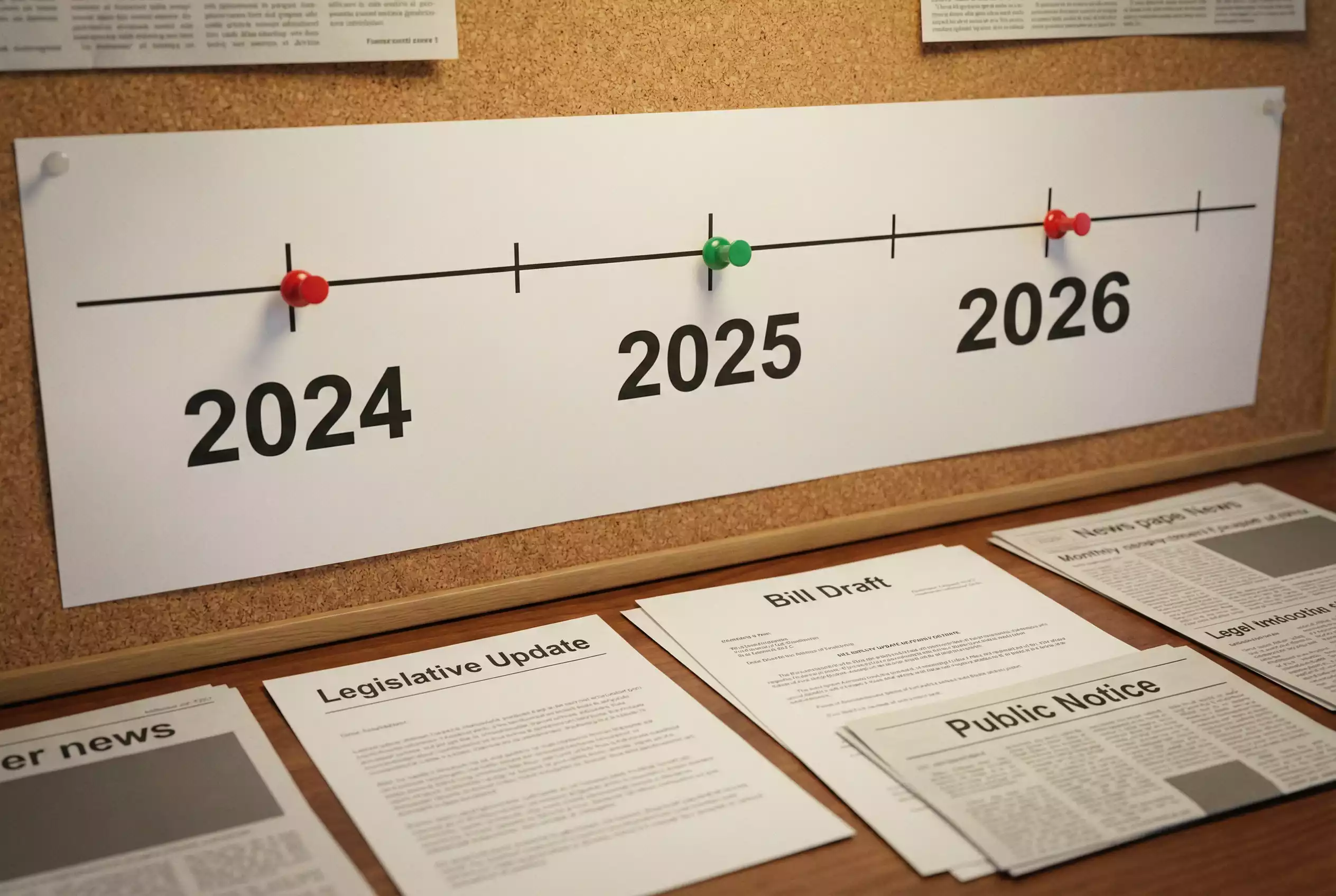
The sweepstakes casino industry spent most of its first decade operating in legislative obscurity. Few lawmakers understood the dual-currency model, fewer thought it worth regulating, and the platforms grew largely unchallenged into a multi-billion-dollar category. Then came 2024, when awareness turned to concern. 2025 brought the crackdown. And 2026 is shaping up as the year the industry discovers what it looks like on the other side. This sweepstakes casino legislation timeline tracks every major bill, ban, and enforcement action across those three pivotal years — a chronology that any player or operator ignores at their own risk.
Sweepstakes Casino Legislation Timeline 2024–2026 — More on this topic at social casino free sc.
2024: The Year of Awareness
In 2024, sweepstakes casinos moved from an industry curiosity to a regulatory target. The shift wasn’t triggered by a single event but by a convergence of data, lobbying, and media coverage that put the category on the radar of state legislators for the first time.
The AGA launched its most aggressive public campaign against sweepstakes casinos, framing them as unregulated gambling operations that avoid licensing requirements and generate no tax revenue. The association published research quantifying the sweepstakes market’s size and its overlap with traditional gambling behavior — data that provided lawmakers with the ammunition to justify action. Industry conferences featured panels dedicated to the sweepstakes question for the first time, and the consensus among regulated gaming executives was clear: these platforms were competition operating without the costs of compliance.
On the legislative side, 2024 saw the introduction of bills in several states, though few advanced to passage. The groundwork was procedural — hearings, committee discussions, stakeholder testimony — rather than legislative. California’s legislative process began in earnest, with early versions of what would become AB 831 circulating among assembly members. New York legislators started examining the scope of sweepstakes activity within the state. Connecticut, New Jersey, and Montana explored their own approaches.
The SPGA formed and introduced its Code of Conduct in late 2024, recognizing that the industry needed to demonstrate self-governance before legislatures imposed external regulation. The move was explicitly defensive — an attempt to establish operator credibility while the political window remained open. Whether the Code arrived early enough to influence legislative outcomes would be answered the following year.
Enforcement activity in 2024 was sporadic but pointed. Several state attorneys general — notably in Arizona and Michigan — sent cease-and-desist letters to sweepstakes operators, establishing a pattern that would escalate dramatically in 2025. These early enforcement actions tested the legal waters without committing to full prosecution, and the industry’s response — a mix of compliance, legal challenge, and geographic withdrawal — previewed the strategies that operators would deploy at scale in the following year.
2025: The Crackdown
The legislative floodgates opened in 2025. According to Yogonet’s year-end summary citing AGA data, six states enacted legislative bans on sweepstakes casinos during the year: California, Connecticut, Montana, New Jersey, Nevada, and New York. Each ban followed a different legislative path, but the outcomes converged: sweepstakes casinos using the dual-currency model were prohibited from operating within state borders.
California’s AB 831, signed by Governor Newsom in October 2025, was the most impactful single piece of legislation. The bill passed both chambers unanimously — a reflection of the political coalition arrayed against the sweepstakes industry — and took effect on January 1, 2026. California represented approximately 17.3 percent of the national sweepstakes market, making its loss a body blow to the industry’s revenue base.
New York’s S5935A, signed by Governor Hochul on December 5, 2025, was notable for its immediate effective date — no transition period, no compliance window. The $762 million New York market vanished overnight, with penalties ranging from $10,000 to $100,000 per violation creating a strong deterrent against non-compliance.
Beyond legislative bans, the cease-and-desist wave intensified. Over 100 letters were sent to sweepstakes operators by state authorities across the country, creating operational uncertainty even in states that hadn’t passed formal legislation. The enforcement posture varied — some states used cease-and-desist as a precursor to legislation, others as a standalone deterrent — but the cumulative effect was a contraction of the geographic market that operators could serve with confidence.
Lawsuits added a third vector. The Los Angeles City Attorney’s suit against Stake.us, private class actions against multiple operators, and state-level legal actions created a multi-front legal environment that forced operators to divert resources from growth to defense. The 2025 crackdown wasn’t a single event — it was a coordinated, multi-state, multi-channel assault on the sweepstakes model’s legitimacy.
2026: Implementation and Aftermath
The first quarter of 2026 has been defined by implementation — the practical process of turning 2025’s legislation into operational reality. Operators have geo-blocked banned states, processed final redemptions for affected players, and restructured their marketing to exclude restricted jurisdictions. The industry is smaller geographically than it was a year ago, and the financial impact is quantifiable.
Eilers & Krejcik Gaming revised its sweepstakes revenue forecast downward, projecting a 10 percent decline in 2026 as the cumulative effect of state bans, enforcement actions, and litigation takes hold, according to iGaming Business. The original 2025 estimate of $4.7 billion in industry net revenue was already reduced to $4.0 billion following AB 831, and the 2026 projection reflects further contraction. The growth era that defined sweepstakes casinos from 2020 through 2024 — with compound annual growth rates of 60 to 70 percent — has given way to an era of managed decline in restricted states and cautious operation in open ones.
The industry’s response has split along two tracks. Larger operators are investing in compliance, legal defense, and lobbying for regulatory frameworks that would legitimize their operations. Smaller operators face a harder calculus: the cost of compliance, legal exposure, and geographic restriction is squeezing margins that were already thin. Consolidation — larger operators acquiring smaller ones — is emerging as a structural trend, though it’s too early to quantify its pace or scale.
What’s Next: Bills to Watch
The legislative pipeline for 2026 and into 2027 contains several bills that could further reshape the sweepstakes map. Indiana’s HB 1052 proposes criminalizing dual-currency sweepstakes operations, and if enacted, would add Indiana to the growing list of ban states. Mississippi’s SB 2510 went further than most by classifying sweepstakes casino operations as a felony with fines up to $100,000 — the harshest penalty framework of any state to date.
See also Sweepstakes Casinos vs. Offshore Gambling Sites.
States with active legislative sessions in 2026 — including Illinois, Ohio, and Pennsylvania — have seen preliminary discussions about sweepstakes regulation, though no bills have advanced to the floor as of early March. The pattern from 2025 suggests that once a bill is introduced in committee, the timeline to passage can be as short as six to nine months in states with strong tribal or regulated gaming lobbies.
Federal legislation remains a possibility but a distant one. Congressional proposals to regulate or restrict sweepstakes casinos at the federal level have been discussed in hearing rooms without advancing to markup. The political will for federal action depends on whether states continue to act individually — making federal legislation redundant — or whether the patchwork of state laws creates enough interstate confusion to justify a uniform federal approach. For the foreseeable future, the action remains at the state level, and the timeline rolls forward one bill at a time.