Introduction: From Facebook Games to Billion-Dollar Platforms
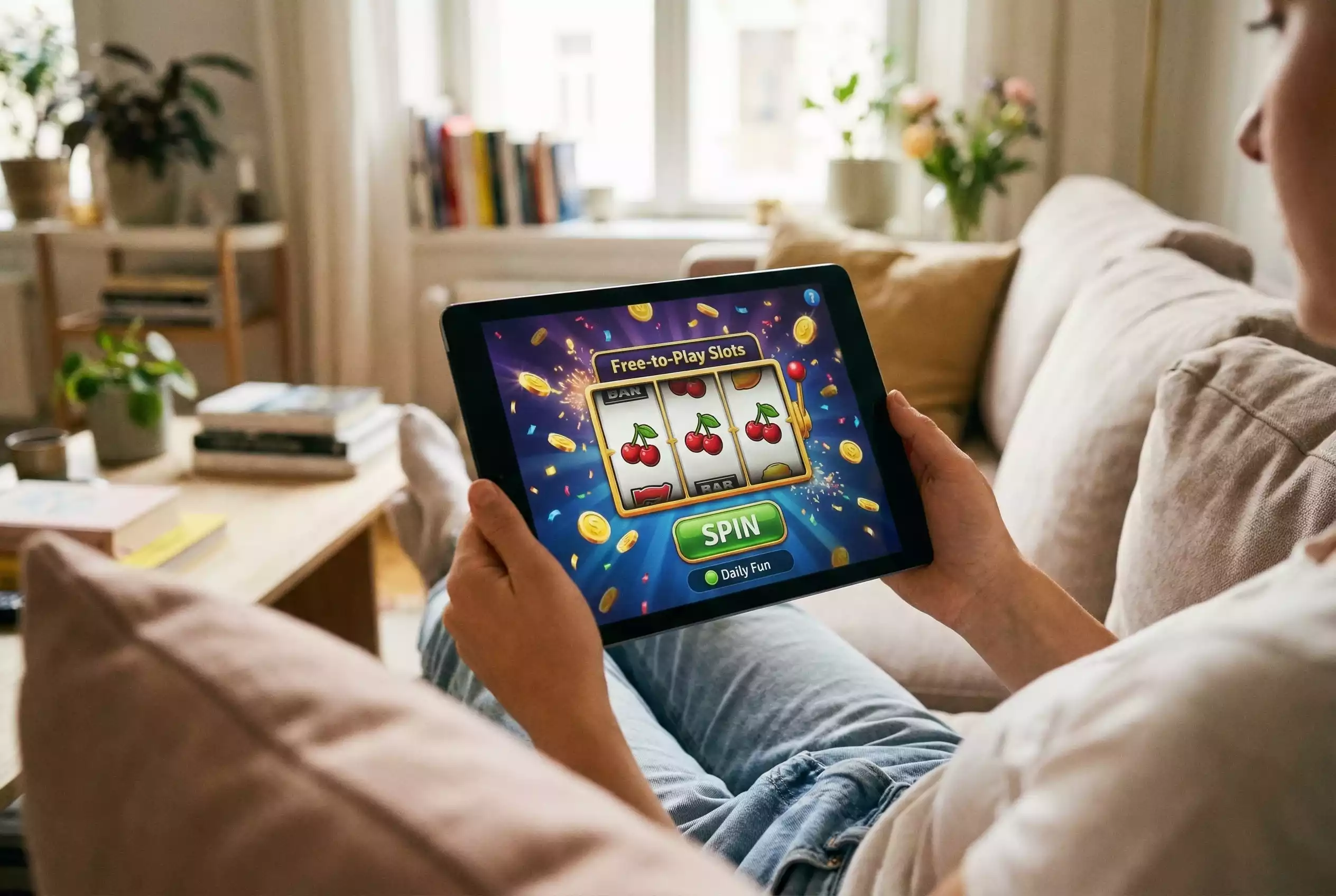
Social casino games started as throwaway diversions on Facebook — virtual slot machines you played between checking notifications and poking friends. The coins you won couldn’t be withdrawn, the stakes were imaginary, and the entire category was treated as a novelty by the gaming industry. That was roughly 2010. By 2025, social casino games online had evolved into a global industry measured in billions, spawning an offshoot — sweepstakes casinos — that blurred the line between entertainment and gambling and triggered a regulatory reckoning across the United States.
Understanding the social casino category on its own terms, separate from the sweepstakes model it eventually birthed, matters for players who want to know what they’re playing and what they’re not. The two categories share visual DNA — the same slot themes, the same table game layouts, often the same software providers — but they differ in one fundamental way that changes everything about the experience.
Social Casino Games Online — More on this topic at social casino free sc.
The Social Casino Market: Size, Growth, Key Players
The global social casino games market reached $7.1 billion in 2024, holding essentially flat compared to the prior year, according to data from a KPMG industry primer citing Eilers & Krejcik Gaming. A broader estimate from Business Research Insights pegged the market at $8.15 billion in 2025, with projections reaching $15.67 billion by 2034 at a compound annual growth rate of 7.54 percent. The variance between estimates reflects different methodologies and category boundaries — some analysts include sweepstakes revenue in the social casino total, others separate the two — but the directional conclusion is consistent: social casino is a mature, multi-billion-dollar market with moderate growth ahead.
The key players in pure social casino (non-sweepstakes) include DoubleDown Interactive, Playtika (which operates Slotomania and House of Fun), SciPlay (developer of Quick Hit Slots), and Zynga (Zynga Poker, Hit It Rich). These companies generate revenue primarily through in-app purchases of virtual chips and coins — currency that has no redemption value and exists solely for gameplay. Their business model is identical in structure to other free-to-play mobile games: the product is free to download and play, and revenue comes from the minority of users who purchase virtual goods.
The market’s maturity is visible in its growth profile. The 60 to 70 percent compound annual growth rates that sweepstakes casinos experienced between 2020 and 2024 have no parallel in the social casino space, where growth has been in the single digits for years. Social casino isn’t shrinking, but it isn’t exploding either. The players who were going to discover virtual slots on their phones have largely already done so, and the category is now driven by retention and monetization of existing users rather than rapid expansion of new ones.
How Social Casino Differs From Sweepstakes Casino
The single difference that separates social casinos from sweepstakes casinos is redeemability. At a social casino, every virtual currency is play money — you can’t cash it out, exchange it for real prizes, or convert it to anything with monetary value outside the game. At a sweepstakes casino, one of the two currencies (sweeps coins) can be redeemed for real prizes, creating a financial dimension that social casinos don’t have.
This distinction drives every downstream difference between the categories. Social casinos don’t require KYC verification because there’s no financial transaction at the redemption end. They don’t need to maintain the legal architecture of the sweepstakes model — no AMOE, no “no purchase necessary” disclaimers, no dual-currency structure designed to avoid the legal definition of gambling. Social casinos are entertainment products, period. Their regulatory classification is simpler, their compliance overhead is lower, and their relationship with state gambling laws is nonexistent because no gambling is occurring.
The player experience, however, is nearly identical in terms of gameplay. The same slot games from the same providers run on both social and sweepstakes platforms. A Pragmatic Play slot at a social casino uses the same RNG, the same graphics, and the same bonus mechanics as the same title at a sweepstakes casino. The experience of spinning the reels is indistinguishable. What differs is the emotional and financial weight of the outcome — a big win on social casino is a high score, while a big win on sweepstakes casino is money.
That emotional difference is the entire reason sweepstakes casinos grew so rapidly. The social casino market proved that millions of people enjoy the mechanics of slot machines. Sweepstakes casinos added the one ingredient social casinos withheld — a real financial stake — and the result was explosive growth that reshaped the online gaming landscape.
Popular Game Types in Social Casinos
Social casino game libraries overwhelmingly center on slots, which account for the vast majority of revenue and player engagement across every major platform. The slot selection at a mature social casino like Slotomania or DoubleDown typically numbers in the hundreds, with new titles added monthly and older ones cycling out. Themes span the usual casino spectrum — ancient civilizations, fantasy, fruit machines, licensed entertainment brands — with production quality that matches or exceeds what you’d find at a physical casino’s slot floor.
Table games occupy a secondary position. Blackjack, roulette, and baccarat are available on most platforms, but they attract a smaller share of the player base than slots. Social casino table games serve primarily as variety content — something to switch to when slot fatigue sets in — rather than as standalone draws. Zynga Poker is the exception: a social poker platform that built its identity around the table game and maintains a dedicated player community separate from the slot-focused platforms.
Video poker, bingo, and specialty games round out the typical social casino library. These categories generate modest engagement compared to slots but serve a retention function by providing variety that keeps players from churning to a competitor. The newest addition to several social casino lineups is live multiplayer tournament modes, where players compete against each other on the same slot or game for leaderboard positions and virtual prizes. The tournament format adds a competitive social dimension that purely solo slot play lacks.
The Transition: How Social Casinos Added SC Mechanics
The sweepstakes casino didn’t emerge from nothing — it evolved directly from the social casino model, and the transition tells you a lot about why the current regulatory battles exist. The template was established by VGW, which launched Chumba Casino in 2012 with a dual-currency model grafted onto the social casino framework. The key innovation was adding a redeemable currency (sweeps coins) alongside the non-redeemable virtual coins that social casinos already used. Everything else — the game library, the UI, the monetization funnel — stayed largely the same.
See also Free SC Coins Hack.
The market response proved the concept immediately. Players who had been spending money at social casinos for pure entertainment discovered that a nearly identical platform offered the same games with the added possibility of winning real prizes. The migration was rapid and, from a business perspective, rational: why play for nothing when you could play for something? VGW’s early dominance of the sweepstakes category was built on this simple upgrade to the social casino proposition.
Other operators followed, and by 2023 the sweepstakes model had evolved from one company’s innovation into an industry-wide movement. Some social casino companies added sweepstakes mechanics to their existing platforms. Others launched entirely new brands. The flood of entrants created the competitive, fragmented market that exists today — and the regulatory attention that threatens to reshape it. The irony is that the social casino model, which operated for over a decade without significant regulatory friction, inadvertently created the conditions for its more controversial descendant. The transition from play-for-fun to play-for-prizes turned a niche entertainment category into a multi-billion-dollar industry that lawmakers could no longer ignore.