Introduction: Indiana Joins the Crackdown
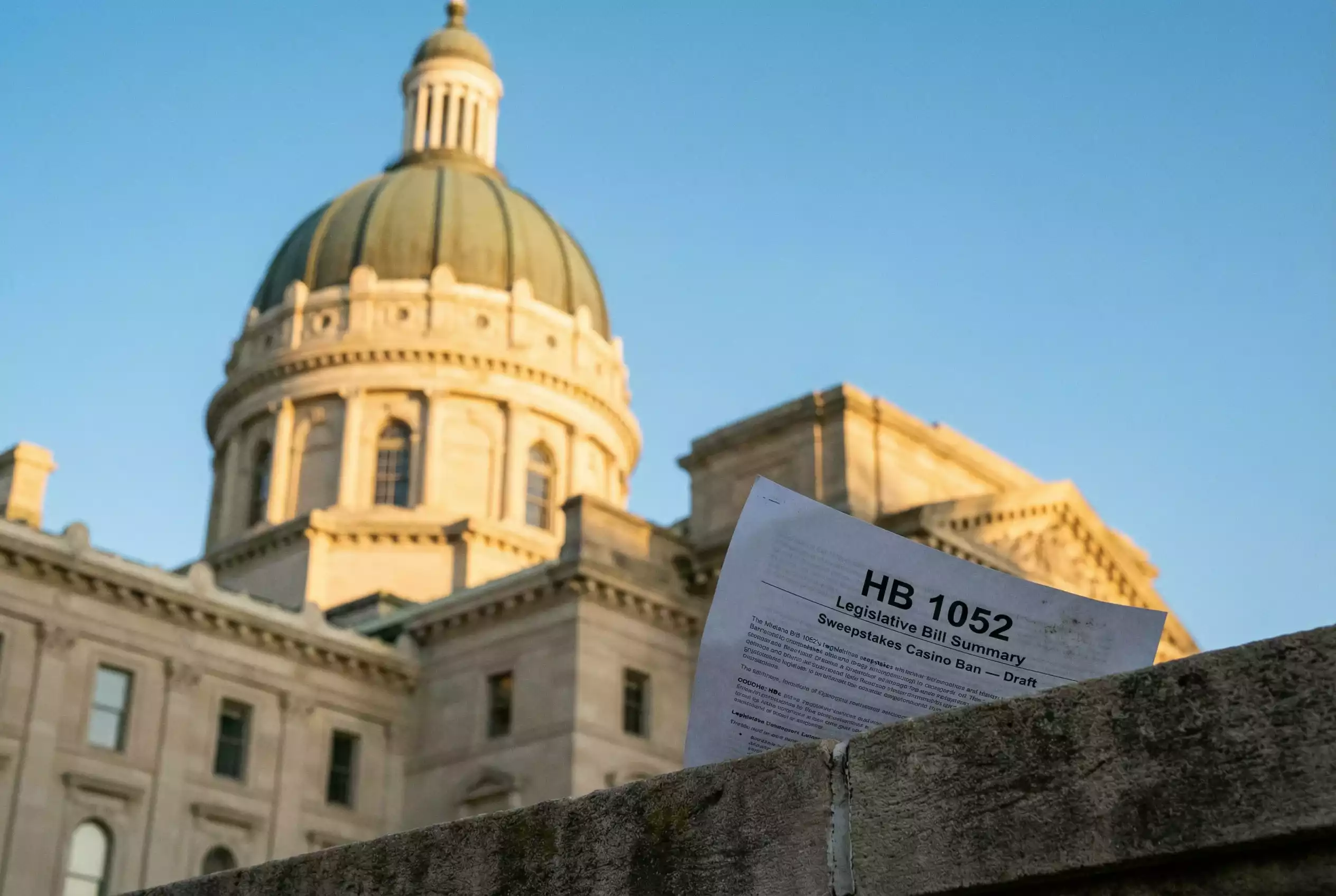
Indiana’s House Bill 1052 represents the next front in the state-by-state campaign against sweepstakes casinos. Filed on December 5, 2025, the bill targets the dual-currency model that sweepstakes casinos use to operate across most of the United States. HB 1052 cleared both chambers of the Indiana General Assembly — passing the House 87–11 on February 2, 2026, and the Senate 37–8 — before being sent to Governor Mike Braun’s desk on February 27, 2026. If signed, Indiana would become the first state in 2026 to formally ban sweepstakes casinos, joining six states that enacted bans in 2025.
The bill authorizes the Indiana Gaming Commission to impose civil penalties of up to $100,000 per violation against operators who serve Indiana residents after the law takes effect on July 1, 2026. Indiana players can currently access sweepstakes casinos, but that window is closing. Whether the state’s 6.7 million residents remain in the addressable market for sweepstakes operators depends on the governor’s signature — and given that no governor except Louisiana’s has vetoed a sweepstakes ban, the odds favor enactment.
Indiana HB 1052 — More on this topic at social casino free sc.
HB 1052 Text: What It Criminalizes
HB 1052 targets the specific mechanics that make sweepstakes casinos function. According to Casino.org’s coverage, the bill defines a “sweepstakes game” as any online contest that utilizes a dual-currency or multi-currency system allowing a player to exchange currency for cash prizes, cash awards, or cash equivalents — and that simulates casino-style gaming including slots, video poker, table games, bingo, or sports wagering. The language is crafted to capture the sweepstakes casino model without inadvertently banning traditional social casino games that use only non-redeemable virtual currency.
The enforcement mechanism relies on civil penalties rather than criminal charges — a notable distinction from Mississippi’s approach. The Indiana Gaming Commission is authorized to issue fines of up to $100,000 per violation against operators or individuals who knowingly use the internet to conduct a sweepstakes game, including out-of-state parties transacting with Indiana residents. An earlier draft of the bill did include criminal penalties, but legislators amended HB 1052 during committee to downgrade the offenses from criminal to civil — a revision that broadened support for the bill in both chambers.
The bill defines the prohibited activity with enough specificity to close common loopholes. It doesn’t just ban “online gambling” in broad terms — it describes the dual-currency purchase-plus-bonus mechanic, the redeemability of the promotional currency, and the use of internet-connected devices to access such platforms. The statute expressly excludes games, contests, or promotions offered by the state lottery commission and peer-to-peer skill-based poker games. This precision makes it difficult for operators to argue that their specific implementation falls outside the bill’s scope.
For individual players, the bill does not impose penalties — the enforcement target is operators, not users. Indiana players would not face any legal consequences for having used sweepstakes casinos before the law takes effect.
Sponsors, Timeline, and Legislative Status
HB 1052 was filed on December 5, 2025, by Rep. Ethan Manning, with co-sponsors Rep. Peggy Mayfield and Rep. Justin Moed. The bill’s sponsors include legislators with connections to Indiana’s regulated gaming industry — the state operates multiple commercial casinos and a licensed online sports betting market — which positioned the bill as an extension of existing regulatory priorities rather than a standalone initiative.
The legislative journey moved quickly. The House Public Policy Committee held its first hearing on January 6, 2026, where the Indiana Gaming Commission testified that existing state law did not clearly prohibit sweepstakes casinos — underscoring the need for new legislation. The House passed the bill on February 2 by an 87–11 vote, the Senate approved an amended version by 37–8, and a conference committee reconciled the differences before the session’s February 27 adjournment deadline. The bill now awaits Governor Braun’s signature. If the governor takes no action within seven days, it becomes law without his signature. If signed or enacted, the law takes effect July 1, 2026.
The lobbying dynamics mirrored what played out in California and New York. Indiana’s commercial casino operators and their associated trade groups supported the bill, as sweepstakes casinos represent unregulated competition that erodes their player base without contributing to the state’s gaming tax revenue. The sweepstakes industry’s counter-lobbying capacity in Indiana was limited — the Social Gaming Leadership Alliance (SGLA) argued for regulation rather than an outright ban, but two amendments proposing regulatory frameworks were defeated during the committee process.
Impact on SC Casino Operators in Indiana
Once HB 1052 takes effect on July 1, 2026, the immediate operational impact mirrors what occurred in California and New York: operators will geo-block Indiana IP addresses, suspend Indiana accounts, and redirect marketing spend away from the state. The financial impact depends on Indiana’s share of each operator’s revenue base — a number that isn’t publicly disclosed but is proportionally smaller than California’s 17.3 percent or New York’s $762 million market.
For operators already navigating restrictions in multiple states, losing Indiana adds another line to the growing list of excluded territories. The incremental revenue loss may be manageable for large operators like VGW, but the cumulative effect of losing state after state creates a compounding problem. Each ban reduces the addressable market, which reduces revenue, which reduces the budget available for legal defense and lobbying in the remaining states. The math trends in one direction.
The $100,000 civil penalty per violation gives the Indiana Gaming Commission meaningful enforcement leverage. While civil fines are less severe than the felony penalties Mississippi has proposed, they apply to out-of-state operators transacting with Indiana residents — extending the Commission’s reach beyond the state’s borders. An operator that might contest a smaller fine in another jurisdiction faces a different calculus when the penalty is six figures per violation and the enforcing body is the state’s gaming regulator.
Indiana’s existing regulated gaming market adds another dimension. The state’s commercial casinos and racinos generate significant tax revenue and employ thousands of residents, giving the regulated industry substantial political capital. With HB 1052 poised to ban sweepstakes platforms, the state reinforces the value proposition of its licensed operators — demonstrating to voters and lawmakers that the regulated market provides entertainment, employment, and revenue that unregulated competitors siphon away without contributing anything to the state.
Comparison With CA and NY Bans
HB 1052 shares the same target as California’s AB 831 and New York’s S5935A — the dual-currency sweepstakes model — but takes a middle path on penalties. California imposed civil fines up to $25,000 per violation. New York imposed fines up to $100,000 with immediate enforcement. Indiana matches New York’s $100,000 ceiling but relies on civil enforcement through the Gaming Commission rather than criminal prosecution. Mississippi, by contrast, proposed felony classification with up to 10 years imprisonment through SB 2510 in 2025, though that bill died in conference — and a successor bill (SB 2104) also failed to advance in 2026.
See also Mississippi SB 2510.
The pattern across states is clear. According to Yogonet’s year-end summary, six states passed sweepstakes bans in 2025, and the momentum continues into 2026. Indiana is the first state to complete legislative action on a ban in 2026, with active bills filed in more than a dozen additional states including Florida, Maine, Virginia, Tennessee, and Oklahoma. The trend suggests that future state bans will not soften — they’ll match or exceed the penalty frameworks established by the early movers.
One structural advantage Indiana’s bill carries: it has already cleared both chambers with strong bipartisan margins. California’s AB 831 passed unanimously — as did New York’s legislation — and Indiana’s lopsided votes (87–11 in the House, 37–8 in the Senate) signal a similarly broad consensus. For players in Indiana, the question is no longer whether the ban will pass the legislature but whether the governor will sign it. Based on precedent — only one governor in the country has vetoed a sweepstakes ban — the outcome appears all but certain.