Introduction: An Ad Blitz With No Regulator Watching
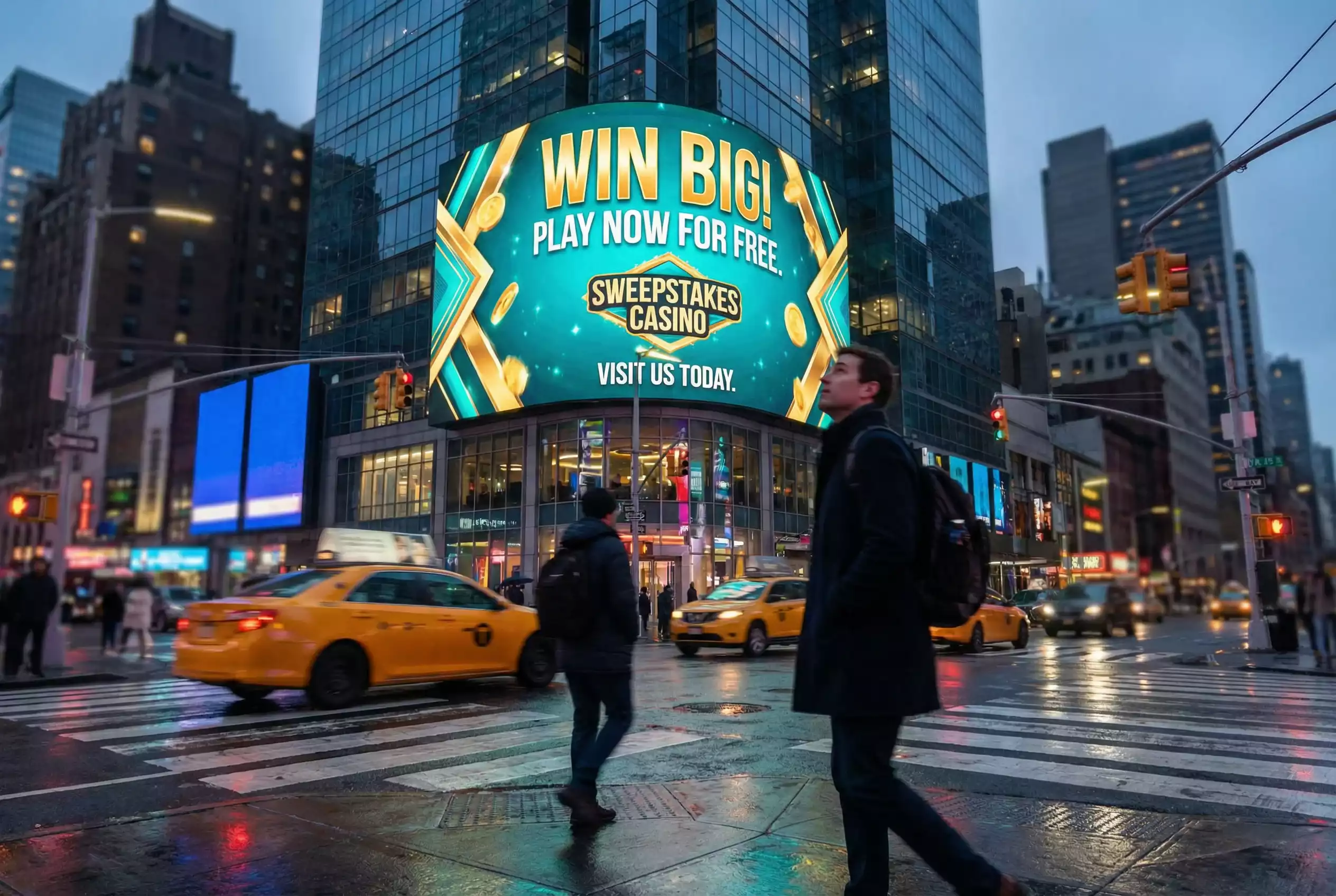
The advertising machine behind sweepstakes casinos is enormous, relentless, and essentially unsupervised. Regulated online casinos in states like New Jersey and Michigan operate under advertising guidelines enforced by gaming commissions — rules about mandatory responsible gaming disclaimers, restrictions on targeting minors, and limits on promotional claims. Sweepstakes casinos face none of that. They advertise through the same channels as regulated operators, spend comparable amounts, and reach the same audiences — but without the guardrails that states have put in place to protect consumers from predatory marketing.
The result is a marketing environment where sweepstakes casino ads are as ubiquitous as they are unaccountable. Understanding the scale, the channels, and the tactics behind that advertising helps you recognize what’s persuasion and what’s information — a distinction the ads themselves aren’t designed to make easy.
Sweepstakes Casino Advertising — More on this topic at social casino free sc.
Ad Spend Numbers: VGW, Stake.us, and the Industry Total
The single largest advertising spender in the sweepstakes casino industry is VGW, the company behind Chumba Casino, LuckyLand Slots, and Global Poker. According to Lineups.com, VGW’s advertising budget runs approximately $300 million annually — a figure that includes celebrity endorsements, television commercials, digital advertising, and sponsorship deals. To put that in context, $300 million exceeds the total advertising spend of many mid-tier regulated gaming operators and would rank VGW among the top advertisers in the US entertainment sector.
Stake.us, before its regulatory retreat from multiple states, was the second most visible advertiser in the category. The platform invested aggressively in digital marketing, influencer partnerships, and social media campaigns targeted at a younger demographic than VGW’s core audience. Stake.us’s parent company had the financial backing to sustain high-volume ad campaigns, and its crypto-native branding gave it differentiated positioning that stood out in a market dominated by VGW’s more mainstream messaging.
The combined advertising spend across the sweepstakes casino industry is difficult to quantify precisely because most operators are private companies with no disclosure requirements. Industry estimates suggest that total US sweepstakes casino advertising exceeds $500 million annually when you include all operators, affiliate commissions, and influencer payments. That figure has grown in rough proportion to the industry’s revenue — as the market expanded from hundreds of millions to billions in gross sales, the marketing budgets scaled accordingly.
The return on that advertising investment is measured in player acquisition. With customer acquisition costs running $50 to $100 per player and millions of new registrations needed annually to sustain growth, the math requires massive top-of-funnel spending. The advertising isn’t optional for these businesses — it’s the engine that feeds the entire revenue model.
Celebrity Endorsements and Influencer Deals
Celebrity partnerships have been a cornerstone of VGW’s marketing strategy. Chumba Casino’s campaigns have featured recognizable faces from entertainment and media, lending mainstream credibility to a category that many consumers still view with skepticism. The calculus is straightforward: a celebrity endorsement signals that a platform is established enough and financially stable enough to afford the partnership, which functions as an implicit trust signal even if the celebrity has no gaming expertise.
Influencer marketing operates on a different scale but follows similar logic. Sweepstakes casinos sponsor content creators across YouTube, Twitch, TikTok, and Instagram, providing them with promo codes, free coin packages, and per-signup commissions. The influencer creates content — typically a “let me show you this casino” video where they play games, showcase bonuses, and share their referral code — and their audience converts to signups at rates that traditional advertising can’t match. The parasocial trust between a creator and their audience transfers to the promoted product, making influencer-driven signups cheaper and stickier than programmatic ad clicks.
The regulatory gap matters here. When a regulated casino sponsors an influencer, state gaming commissions can require specific disclosures and restrict promotional claims. When a sweepstakes casino sponsors the same influencer, those requirements don’t apply. The result is content that can make claims about winning potential, bonus value, and gameplay odds that a regulated operator’s advertising department would never approve. Players who discover sweepstakes casinos through influencer content should apply the same skepticism they’d bring to any sponsored product placement — the creator is being paid to promote, not to evaluate.
Ad Platforms: Where SC Casinos Advertise
Sweepstakes casino advertising appears across every major digital platform, and the distribution reflects where the target audience spends its time.
Facebook and Instagram are the highest-volume channels. Meta’s advertising platform allows granular targeting by age, location, interests, and behavior — enabling sweepstakes casinos to reach users who have demonstrated interest in gambling, casino games, or related entertainment. The volume of sweepstakes casino ads on Meta platforms has drawn attention from regulators and advocacy groups, though Meta’s advertising policies technically permit gambling-related ads with age restrictions and geographic targeting. Whether sweepstakes casinos qualify as “gambling” under Meta’s ad policies is another instance of the definitional ambiguity that characterizes the industry.
YouTube hosts both direct advertising (pre-roll and mid-roll ads) and sponsored content from influencers. The platform’s recommendation algorithm tends to surface casino-related content to users who watch even one gambling video, creating a funnel that deepens exposure over time. Google Ads, which powers YouTube’s advertising, has gambling-specific policies that vary by jurisdiction — but sweepstakes casinos’ classification as “not gambling” in most states allows them to advertise through channels that traditional online casinos cannot.
Television advertising, primarily through cable networks and streaming services, represents VGW’s most traditional marketing channel. Chumba Casino commercials run during sports broadcasts, reality shows, and late-night programming — time slots that overlap with the demographics most likely to try an online casino product. Television ads carry a legitimacy premium that digital channels don’t; seeing a sweepstakes casino advertised during a major sporting event normalizes the category in a way that a Facebook sidebar ad cannot.
Consumer Perception: Do People Know It’s Gambling?
The central question hanging over sweepstakes casino advertising is whether consumers understand what they’re signing up for. The industry’s legal position depends on the platforms being promotional sweepstakes, not gambling. The advertising, however, looks and feels exactly like gambling marketing — because the product itself looks and feels exactly like gambling.
See also Indiana HB 1052.
Data from AGA research tracked by Sensor Tower shows that sweepstakes casino advertising accounts for approximately 50 percent of all online casino ads in the United States. That advertising parity means consumers encounter sweepstakes casino ads as frequently as they encounter regulated casino ads, and the visual language of both categories is nearly identical: spinning reels, jackpot numbers, bonus claims, and calls to action that promise prizes.
Tres York, Vice President of Government Relations at the AGA, has stated the conclusion bluntly: the data is clear — consumers see through the sweepstakes label and recognize the activity as gambling. That recognition creates a regulatory problem. If consumers perceive sweepstakes casinos as gambling, then the platforms’ legal defense — that they’re promotional sweepstakes, not gambling — is undermined by their own marketing success. The advertising is too effective at communicating “this is a casino where you can win money” for the legal argument that “this is not gambling” to remain credible with the public.
For players, the takeaway is simpler: the ads are designed to convert you into a user, not to inform you about the product. The bonus numbers in the ad may be technically accurate but are presented without context — without the payout rates, the wagering requirements, or the odds that would let you evaluate the actual value. Treat every sweepstakes casino advertisement as a marketing document, not an information source, and verify any claims independently before they influence your decisions.