

Introduction: Trust in an Unregulated Category
The safety question at sweepstakes casinos isn’t academic — it’s the first thing a reasonable person should ask before uploading identity documents and connecting a bank account to a platform that operates without a gaming license. Sweepstakes casinos sit outside the regulatory frameworks that govern traditional online casinos, which means the safety standards that protect players at licensed platforms — mandatory audits, player fund segregation, dispute resolution through gaming commissions — don’t automatically apply here.
The stakes of that absence are real and growing. Approximately 20 private lawsuits have been filed against sweepstakes casino operators alleging violations of state gambling laws, according to reporting from the Public Gaming Research Institute. Those lawsuits range from class actions by players who argue they were gambling without adequate protections to state attorney general suits alleging deceptive business practices. The legal activity confirms what common sense suggests: not every platform calling itself a sweepstakes casino operates with the same level of integrity, and distinguishing safe operators from risky ones is a skill worth developing.
Are Sweepstakes Casinos Safe? Security, Fairness, and Scam Red Flags — More on this topic at social casino free sc.
Security Measures: SSL, RNG, Software Audits
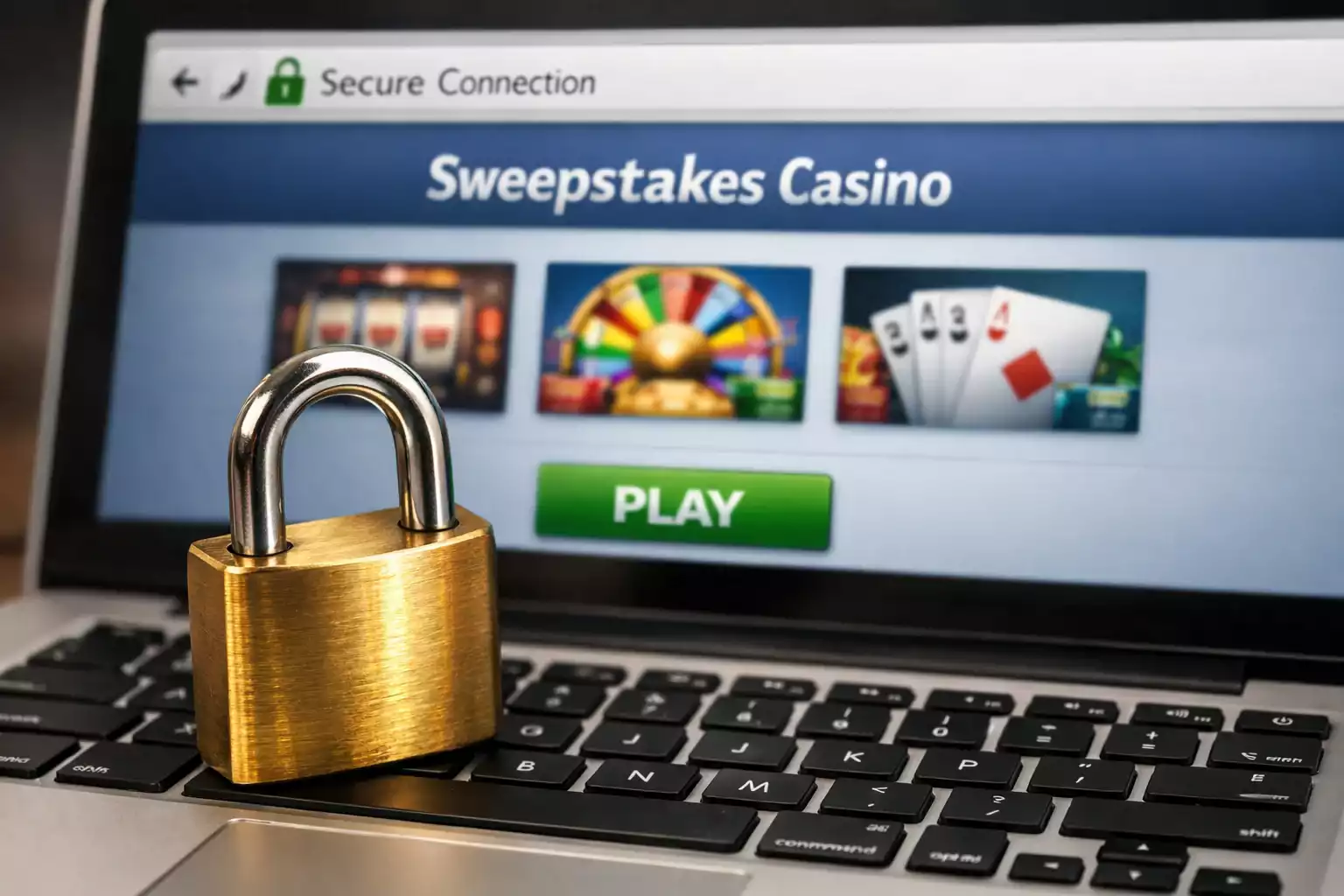
The technical security infrastructure at reputable sweepstakes casinos is, in most cases, comparable to what you’d find at a regulated online casino. SSL encryption — the same technology that protects your banking sessions — is standard across every major platform. Look for the padlock icon in your browser’s address bar and confirm that the URL begins with “https” before entering any personal information. If either is missing, leave the site immediately.
Random number generation is the foundation of game fairness. Legitimate sweepstakes casinos use certified RNG software from established providers — companies like Pragmatic Play, NetEnt, and Push Gaming whose games undergo independent testing at labs like iTech Labs, GLI, or BMM Testlabs. When you play a licensed game from a known provider, the RNG behind it has been tested and certified, regardless of which casino hosts the game. The fairness concern shifts to in-house proprietary games, where the RNG may or may not have undergone external testing. Platforms that use exclusively proprietary games with no disclosed testing create a trust gap that brand-name providers fill.
Software audits are where the regulated and unregulated worlds diverge most sharply. Licensed online casinos in states like New Jersey undergo regular audits by the Division of Gaming Enforcement, which verifies everything from RNG integrity to player fund handling. Sweepstakes casinos face no equivalent requirement. Some operators voluntarily commission third-party audits and publish the results; others don’t. The presence of an audit report — typically from a firm like eCOGRA or iTech Labs — is a meaningful trust signal. Its absence doesn’t necessarily indicate a problem, but it does mean you’re relying on the operator’s word rather than independent verification.
Player fund handling is another security dimension. Regulated casinos are required to segregate player funds from operating capital, ensuring that your money is available for withdrawal even if the company faces financial difficulties. No such requirement exists for sweepstakes casinos. Your SC balance and any pending redemptions exist at the operator’s discretion, backed by the company’s financial health rather than a regulatory mandate. For large balances, this is worth considering.
Red Flags of Scam Sweepstakes Sites
The proliferation of sweepstakes casinos has inevitably attracted operators who don’t intend to honor redemptions, protect player data, or operate within even the loosest interpretation of the law. Identifying scam sites before you hand over personal information is worth the few minutes of due diligence.
No identifiable corporate entity is the clearest red flag. Legitimate sweepstakes casinos disclose their operating company, corporate address, and jurisdiction of registration in their terms of service or about page. If you can’t find out who runs the platform — no company name, no physical address, no jurisdiction — that’s not an oversight. It’s a deliberate choice by operators who don’t want to be found.
Unrealistic bonus promises indicate a platform optimizing for signups rather than sustainable operations. An established casino might offer 2 to 10 SC at signup. A scam site might promise 500 SC free with no conditions. The economics don’t support massive giveaways at legitimate platforms, because every SC issued creates a potential redemption liability. If the bonus sounds too generous, the operator either doesn’t intend to honor redemptions or doesn’t plan to be around long enough for it to matter.
No visible responsible gaming tools or age verification beyond a basic checkbox suggests a platform that hasn’t invested in compliance infrastructure. Legitimate operators implement KYC processes, spending limits, and self-exclusion options because they expect to serve players over the long term. Fly-by-night operations skip these investments because their time horizon is measured in months, not years.
Payment method red flags include platforms that accept only cryptocurrency with no traditional payment options, platforms that require unusually large minimum deposits to activate accounts, and platforms that ask for financial information before you’ve played a single game. Legitimate sweepstakes casinos let you play for free before asking for anything.
Verified vs. Unverified Operators: How to Tell
The simplest heuristic for evaluating an operator’s legitimacy is track record. Platforms that have been operating for multiple years, processing redemptions consistently, and maintaining a visible corporate presence are statistically safer than platforms that launched last month with a polished website and no operating history.
Market dominance is another signal. According to Waterhouse VC fund data citing EKG estimates, VGW held more than 90 percent of the sweepstakes market at its peak. Chumba Casino, LuckyLand Slots, and Global Poker — all VGW properties — have processed millions of redemptions over years of operation. That track record doesn’t make them immune to criticism, but it does establish that they honor their financial obligations to players. Pulsz, WOW Vegas, and a handful of other mid-tier operators have built similar (if shorter) records of reliable redemption processing.
SPGA membership, while voluntary, provides a third-party benchmark. Operators who have signed the SPGA Code of Conduct have agreed to minimum standards for player protection, advertising, and fair play. Membership isn’t a guarantee of safety, but it’s a data point that non-member platforms can’t offer. Check the SPGA website for current membership lists before committing to a platform.
Player community feedback — from forums, Reddit threads, and review aggregators — provides ground-level intelligence that corporate disclosures don’t capture. Consistent reports of delayed or refused redemptions, unresponsive customer support, or sudden account closures without explanation are patterns that identify problematic operators more reliably than any single metric. One negative review is noise. Dozens of reviews describing the same problem are signal.
What to Do If Something Goes Wrong
If a sweepstakes casino refuses a legitimate redemption, closes your account without explanation, or mishandles your personal data, your options are more limited than they would be at a regulated platform — but they’re not zero.
See also Sweepstakes Casino Legislation Timeline 2024–2026.
Start with the platform’s customer support. Document everything: take screenshots of your balance, transaction history, and any communication with the casino. Submit a formal complaint through their support channel and request a written response. Many disputes result from processing errors or KYC issues that resolve with clear communication and documentation.
If the platform doesn’t resolve the issue, escalate to your state’s consumer protection office or attorney general. While these agencies don’t regulate sweepstakes casinos directly, they handle consumer complaints against businesses operating within the state. A formal complaint creates a paper trail that has value even if it doesn’t produce immediate action — state AGs who receive multiple complaints about the same operator are more likely to investigate.
For financial disputes — unauthorized charges, refused refunds for failed transactions — your bank or credit card issuer provides a separate recourse path through the chargeback process. File a dispute with your financial institution, provide documentation of the issue, and let the bank’s dispute resolution process handle the interaction with the casino’s payment processor. This approach recovers funds more reliably than negotiating directly with an unresponsive operator.