Introduction: What Happened on January 1, 2026
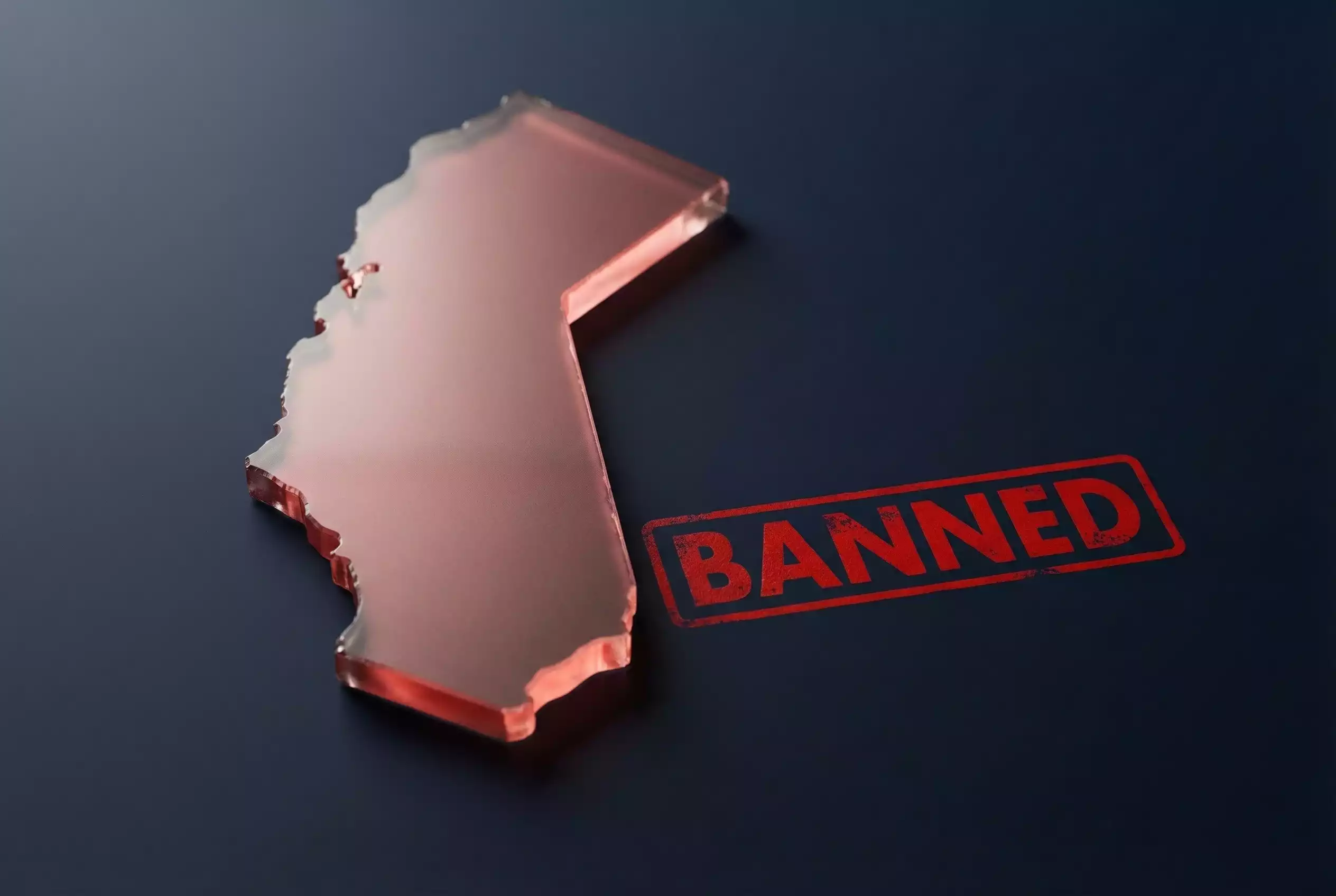
On January 1, 2026, California became the largest state to ban sweepstakes casinos outright. Assembly Bill 831, signed by Governor Gavin Newsom in October 2025, took effect with the new year, making it illegal to operate or promote sweepstakes casino games targeting California residents. Platforms that had been freely accessible to the state’s nearly 40 million residents — Chumba Casino, Pulsz, WOW Vegas, Stake.us, and dozens of others — were required to block California IP addresses, suspend California accounts, and cease all marketing directed at the state.
The ban didn’t arrive without warning. Legislative momentum had been building throughout 2025, driven by a coalition of tribal gaming interests, the American Gaming Association, and consumer protection advocates who argued that sweepstakes casinos were functionally gambling operations avoiding regulation. But the speed and unanimity of AB 831’s passage caught many in the industry off guard, and its ripple effects extended well beyond California’s borders. Understanding what AB 831 actually prohibits, how it passed, and what it means for California players is essential context for anyone tracking the sweepstakes casino landscape in 2026.
California Sweepstakes Casino Ban 2026 — More on this topic at social casino free sc.
AB 831 in Detail: What It Bans and Doesn’t Ban
AB 831 targets sweepstakes casinos with precision. The bill text prohibits the operation, promotion, and facilitation of online platforms that use a dual-currency model — specifically, platforms where players acquire virtual coins through purchase and receive a secondary redeemable currency as a promotional bonus. The law defines the prohibited activity broadly enough to capture the core sweepstakes casino mechanic while stopping short of banning all social casino games. Traditional social casinos that offer only non-redeemable virtual currency — pure play-for-fun platforms — are not covered by the ban.
The penalties are significant. Operators who violate AB 831 face fines of up to $25,000 per violation, with each day of continued operation constituting a separate offense. The compounding structure means that an operator who ignores the ban for even a week could face nearly $200,000 in cumulative fines — a deterrent designed to make compliance economically rational even for the most profitable platforms. California’s Attorney General, along with county and city prosecutors, has enforcement authority under the statute.
What AB 831 doesn’t ban is equally important. Pure social casino apps — games like Zynga Poker or Slotomania that use only non-redeemable virtual currency — continue to operate legally in California. The distinction rests entirely on whether the platform offers a redeemable currency component. If virtual coins can be exchanged for cash prizes, the platform falls within AB 831’s scope. If all virtual currencies are non-redeemable entertainment tokens, it doesn’t. This line is the defining feature of the legislation and the reason it targets sweepstakes casinos specifically rather than the broader social gaming category.
The bill also includes provisions for consumer protection during the transition. Operators were given a brief compliance window to process pending SC redemptions for California players before the ban took effect, ensuring that players with existing redeemable balances weren’t stranded with worthless SC. Whether every operator honored that provision fully is a separate and less clear-cut question.
The Political Path: How AB 831 Passed Unanimously
The most remarkable aspect of AB 831’s legislative journey is the vote count: the bill passed both chambers of the California legislature without a single dissenting vote. In a state capitol where even mundane legislation often splits along partisan or interest-group lines, the unanimity was striking. It reflected a rare alignment of stakeholders who typically oppose each other.
California’s tribal gaming operators were among the most vocal supporters of the ban. The state’s Native American tribes operate a massive land-based casino industry under compacts with the state government, and they viewed sweepstakes casinos as unregulated competition siphoning revenue from their operations. Tribal lobbying organizations argued that sweepstakes operators were exploiting a legal gray area to offer gambling without paying the licensing fees, taxes, or regulatory compliance costs that tribal and commercial casinos bear.
The AGA backed the push with data and messaging, framing sweepstakes casinos as a consumer protection issue rather than purely a competition concern. Consumer advocates added a third vector, pointing to the absence of responsible gaming tools, self-exclusion options, and advertising standards at sweepstakes platforms. The combined pressure from tribal gaming, the regulated industry, and consumer protection groups left legislators with virtually no constituency arguing against the bill.
The sweepstakes industry’s own lobbying efforts, coordinated partly through the Social Gaming Leadership Alliance, argued for regulation rather than prohibition — a framework that would bring operators into compliance rather than banning them entirely. That argument failed to gain traction. The political calculus in Sacramento was clear: supporting sweepstakes casinos carried risk from multiple powerful constituencies, while banning them carried risk from none.
Revenue Impact: CA Was 17.3% of the Market
California wasn’t just another state in the sweepstakes casino market — it was the single largest state market by revenue. Eilers & Krejcik Gaming estimated that California accounted for 17.3 percent of total US sweepstakes sales, a share proportional to the state’s enormous population and high digital engagement. Losing that market in a single legislative stroke forced the industry to recalibrate its projections.
The impact showed up quickly in analyst forecasts. According to iGaming Business, EKG revised its 2025 sweepstakes revenue estimate downward from $4.7 billion to $4.0 billion following AB 831’s passage, and projected a further 10 percent decline in 2026 as the ban took full effect and other states followed California’s lead. The revision wasn’t driven solely by the loss of California revenue — it reflected a broader market sentiment shift, as investors and operators began pricing in the likelihood that more states would follow suit.
For individual operators, the California exit meant different things at different scales. VGW, which dominated the national market, absorbed the revenue loss across its massive operation. Smaller operators with disproportionate California exposure faced sharper pain — some losing 20 percent or more of their player base overnight. The ban also disrupted marketing pipelines: operators who had invested heavily in California-targeted advertising saw those campaigns go dark, with the acquisition spending already sunk and the leads no longer convertible.
The secondary effect was psychological. California’s ban signaled to other large states — Texas, Florida, Illinois — that sweepstakes prohibition was politically viable even in states without a strong tribal gaming lobby. The precedent effect may ultimately prove more damaging to the industry than the direct revenue loss.
What CA Players Can Do Now
If you’re a California resident, your sweepstakes casino options as of January 2026 are effectively zero — at least for platforms that offer redeemable SC. Any legitimate operator complying with AB 831 has either blocked California registrations or suspended existing California accounts. Attempting to access these platforms via VPN violates the casino’s terms of service and potentially the law itself, creating a risk that far outweighs the value of a few sweeps coins.
See also New York Sweepstakes Casino Ban.
Traditional social casino apps remain legal and accessible. Platforms that use only non-redeemable virtual currency — games where you play for entertainment and the coins have no cash value — fall outside AB 831’s scope. These apps won’t scratch the itch for players motivated by prize redemption, but they offer the same game mechanics and visual experience for those who primarily enjoy the gameplay itself.
Regulated online gambling, should it become available in California, would provide the most comprehensive alternative. Multiple proposals for regulated iGaming and online sports betting have been introduced in the California legislature over the past several years, though none has passed as of early 2026. The irony of AB 831 is that it removed the unregulated sweepstakes option without providing the regulated alternative that many of the ban’s supporters also advocate for. Whether that gap closes through future legislation remains one of the most consequential open questions in US gaming policy.
For California players with unredeemed SC balances that were stranded when the ban took effect, the path forward depends on the specific platform. Some operators proactively processed pending redemptions before January 1. Others require you to contact support to initiate a final withdrawal. If you still have an unredeemed balance at any platform, reaching out to their support team directly is the first and most practical step.