
Introduction: Why Responsible Gaming Is Urgent for SC Casinos
Responsible gaming at sweepstakes casinos isn’t a checkbox on a compliance form — it’s a gap that grows more conspicuous as the industry scales. These platforms operate without the regulatory infrastructure that governs traditional online casinos, which means the player protections you’d find at a licensed iGaming site in New Jersey or Michigan often don’t exist at sweepstakes casinos. No mandatory self-exclusion registries. No state-mandated deposit limits. No gaming commission reviewing complaints.
The urgency of that gap becomes clearer against the player data. According to AGA research, 68 percent of sweepstakes casino players say their primary motivation is winning money. Not entertainment, not social interaction — money. Tres York, Vice President of Government Relations at the American Gaming Association, has put it plainly: the data shows that consumers see through the sweepstakes facade and recognize the activity for what it is — gambling. When the majority of a platform’s users are motivated by monetary gain and the platform itself lacks the safeguards required of actual gambling operations, the responsible gaming conversation isn’t optional. It’s overdue.
Responsible Gaming at Sweepstakes Casinos — More on this topic at social casino free sc.
What Tools Sweepstakes Casinos Actually Offer
The responsible gaming tools available at sweepstakes casinos vary dramatically by platform, and the differences reveal which operators take the issue seriously versus which treat it as a marketing talking point.
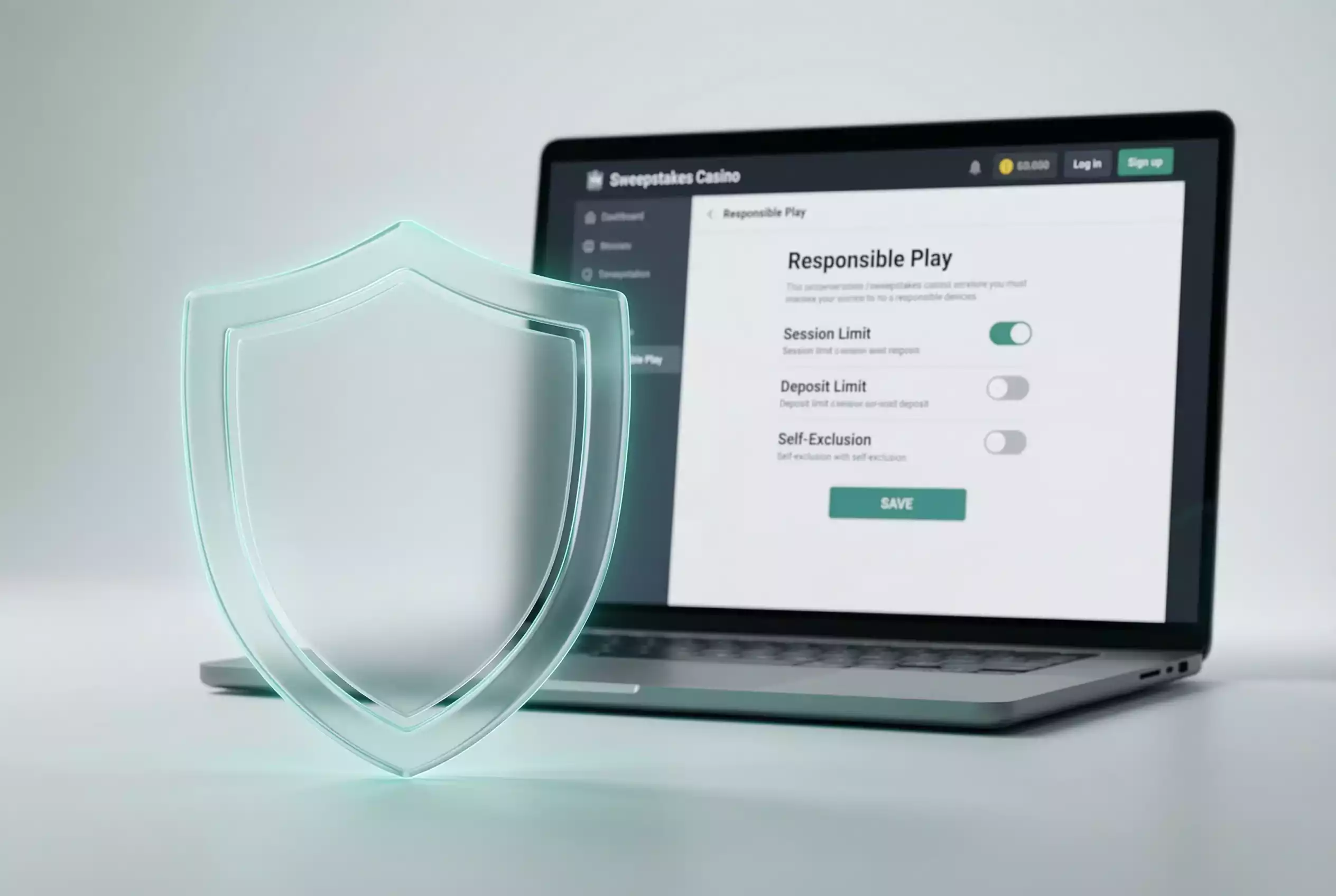
Spending limits — the ability to set a daily, weekly, or monthly cap on gold coin purchases — exist at some platforms but not all. Chumba Casino allows players to set purchase limits through their account settings, a feature that prevents impulsive spending by requiring a cooldown period before the limit can be raised again. This is the most meaningful responsible gaming tool a sweepstakes casino can offer, because it addresses the behavior at the source: the moment money enters the system.
Session time reminders are more common. These are pop-up notifications that appear after a set period of continuous play — typically 60 to 90 minutes — alerting you to how long you’ve been active. The notifications are informational rather than restrictive: they tell you the time but don’t force you to stop. Their value depends entirely on whether you act on the reminder, which research on gambling behavior suggests many players don’t when they’re in the middle of a session.
Account cooling-off periods allow you to temporarily suspend your account for a set duration — usually 24 hours to 30 days — during which you can’t log in, play, or purchase. This is the sweepstakes equivalent of a self-exclusion lite: it removes access temporarily without the permanence of a full closure. Some platforms offer this as a self-service option; others require you to contact support, which adds friction that can either help (forcing a deliberate decision) or hurt (delaying action when someone needs it immediately).
Permanent account closure is available at every reputable platform, though the process and its reversibility vary. Some casinos delete your account data permanently upon closure. Others archive it, allowing reactivation after a minimum period. If you need to close an account to protect yourself, choose a platform that makes permanent closure genuinely permanent — no reactivation after an email to support.
Gaps: What’s Missing Compared to Regulated Casinos
The distance between sweepstakes casino protections and those required at regulated online casinos is measured not in degrees but in categories of missing safeguards.
State self-exclusion registries are the most significant absence. In regulated iGaming states, players can add themselves to a state-run exclusion list that bars them from all licensed platforms simultaneously. One registration locks them out of every operator in the state. No equivalent exists for sweepstakes casinos. If you self-exclude from Chumba, you can still play at Pulsz, WOW Vegas, Stake.us, and every other platform. The protection is platform-by-platform, not systemic, which means someone trying to control a gambling problem has to close accounts individually at each casino they use.
Mandatory responsible gaming training for customer-facing staff is standard at regulated casinos and absent from the sweepstakes sector. Support agents at sweepstakes platforms may or may not be trained to recognize signs of problem gambling in customer interactions. Some operators have invested in training; others haven’t. You can’t tell from the outside which category a platform falls into.
Advertising restrictions compound the problem. Data from AGA research shows that sweepstakes casino advertising accounts for approximately 50 percent of all online casino advertising in the United States. That volume of marketing, aimed at converting free players into buyers, operates without the advertising standards imposed on regulated operators — standards that include mandatory responsible gaming messaging, restrictions on targeting vulnerable populations, and cooling-off disclaimers. The sweepstakes advertising environment is essentially self-regulated, with the predictable result that player protection messaging takes a back seat to acquisition metrics.
Dispute resolution is another gap. At regulated casinos, the state gaming commission acts as an independent arbiter for player complaints. Sweepstakes casinos have no equivalent oversight body. Disputes over account closures, rejected redemptions, or bonus terms are resolved between you and the operator’s support team, with no external authority to escalate to if you disagree with their decision.
Red Flags That You’re Overspending
The line between recreational spending and problematic spending at sweepstakes casinos isn’t always obvious, partly because the dual-currency model obscures how much real money is flowing through your account. Gold coin packages are priced like small entertainment purchases — $5, $10, $20 — and each individual transaction feels minor. The aggregate, over weeks and months, can be substantial without any single purchase triggering alarm bells.
Track your total GC purchases over the past 30 days. If the number surprises you, that’s a flag. Most platforms provide a purchase history in your account settings. If yours doesn’t, check your bank or credit card statement for the recurring charges. The total is what matters, not any individual transaction.
Buying coin packages to fund a specific play session — rather than purchasing occasionally when a good bonus appears — indicates a shift from entertainment to need. The distinction is whether purchases feel optional or compulsory. When you open the casino expecting to play and immediately navigate to the coin store because your SC balance is empty, the purchasing has become a prerequisite for the activity rather than an enhancement to it.
Emotional purchasing is another warning sign. Buying GC after a losing session to “recover” SC losses, purchasing after a stressful day to access the distraction of gameplay, or spending more than planned because a near-miss made the next win feel imminent — these patterns mirror well-documented problem gambling behaviors. The sweepstakes framing doesn’t change the underlying psychology.
Concealing purchases from a partner, using credit to buy coin packages, or borrowing money to fund play are bright-line indicators. If any of these apply, the responsible action is to close the account, not to set a spending limit and hope for better self-control next month.
Resources: Helplines and Support
If your relationship with sweepstakes casinos has moved from entertainment to something that causes financial stress, relationship friction, or anxiety, external support is available and effective.
The National Council on Problem Gambling operates the National Problem Gambling Helpline at 1-800-MY-RESET (with 1-800-522-4700 also still active), available 24/7. The service is free, confidential, and staffed by trained counselors who understand gambling behavior in all its forms — including sweepstakes and social casino play. They can help you assess whether your play has become problematic and connect you with local treatment resources.
See also How Sweepstakes Casinos Make Money.
The NCPG also operates a text-based service (text 800GAM) and an online chat at ncpgambling.org for people who prefer not to make a phone call. The text and chat options are particularly useful for players who are currently in a session and want to reach out in real time without leaving the house or making a voice call.
Gamblers Anonymous maintains a national meeting directory at ga.org, with both in-person and virtual meetings available across every US state. The peer support model isn’t for everyone, but for players who benefit from shared experience and accountability, GA meetings provide a structured environment that professional counseling alone may not replicate.
The most important resource, though, is the platform’s own account controls. Before a crisis point, use the tools that exist: set purchase limits, activate session reminders, and know where the account closure option lives in your settings. These measures work best as preventive guardrails, not emergency exits — the time to install them is when things are going fine, not when they’ve already gone wrong.